
GE Ultrasound Feature
AI Assistant
AI & AutomationAI Assistant is the artificial intelligence detection feature built into GE's Invenia ABUS 2.0 automated breast ultrasound machine. It analyzes 3D breast ultrasound volumes acquired during automated scanning and identifies regions of interest that may contain lesions. The AI marks these regions with visual indicators, directing the interpreting radiologist's attention to areas that warrant closer evaluation. For breast imaging centers reading dozens of ABUS volumes per day, AI Assistant reduces the time radiologists spend scrolling through each volume by highlighting the frames and regions most likely to contain findings. The feature functions as a computer-aided detection (CADe) tool, supplementing rather than replacing radiologist interpretation.

Key Benefits
Why AI Assistant matters
Flags potential lesions across large volume datasets
Each ABUS exam generates multiple 3D volumes with hundreds of slices. AI Assistant pre-screens these volumes and marks regions of interest, so the radiologist focuses attention where findings are most likely rather than reviewing every slice with equal scrutiny.
Reduces per-volume read time for high-throughput breast imaging
Without AI assistance, ABUS volume interpretation takes 5-10 minutes per volume. AI-flagged volumes allow the radiologist to navigate directly to regions of interest, reducing interpretation time and supporting the reading throughput needed for population-level breast screening programs.
Second-reader function catches findings that fatigue can obscure
Reader fatigue is a documented factor in missed findings during batch reading sessions. AI Assistant provides a consistent, fatigue-free second analysis of every volume, flagging regions the radiologist can cross-reference against their own assessment.
Supports supplemental screening in dense breast tissue
Mammography sensitivity decreases in women with dense breast tissue. ABUS with AI Assistant adds an independent detection modality not affected by breast density, improving the overall sensitivity of the screening workflow for this high-risk population.
About AI Assistant
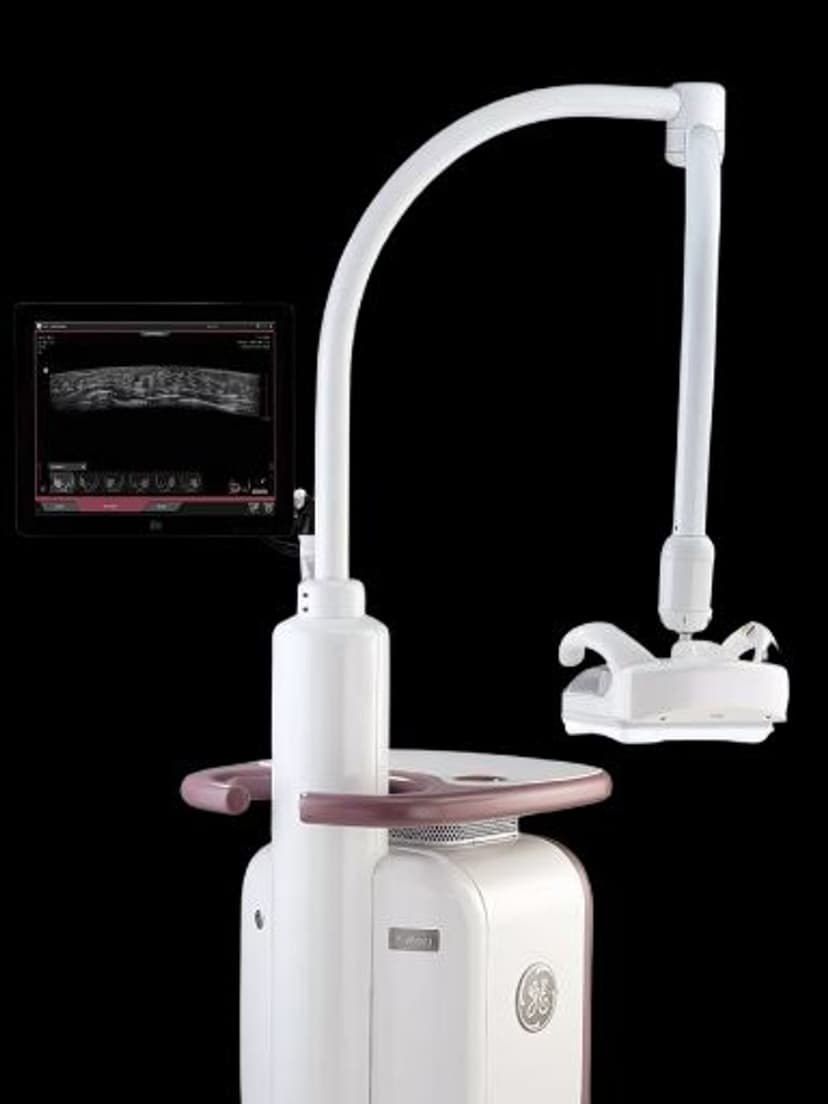
Invenia ABUS acquires automated 3D whole-breast volumes with a wide-field reverse-curve transducer, generating multiple datasets per patient for radiologist review. AI Assistant applies trained detection models after acquisition, analyzing each slice for lesion-like morphology, margin irregularity, acoustic shadowing, and coronal-plane distortion. When the software identifies a region of interest, it places a visual marker in the dataset and flags the location for review. The radiologist remains the decision-maker, but the flagged findings act as a second reader during high-volume dense-breast screening. ABUS studies contain far more images than handheld breast ultrasound, and reader fatigue can increase oversight risk. In practice, AI Assistant focuses attention on the most suspicious areas, shortens review time, and supports more consistent case reading across radiologists and sites.
Availability
Available on these systems
Our Partners

















Want AI Assistant in your practice?
Request a quote for a system that includes this feature.