
GE Ultrasound Feature
ICE
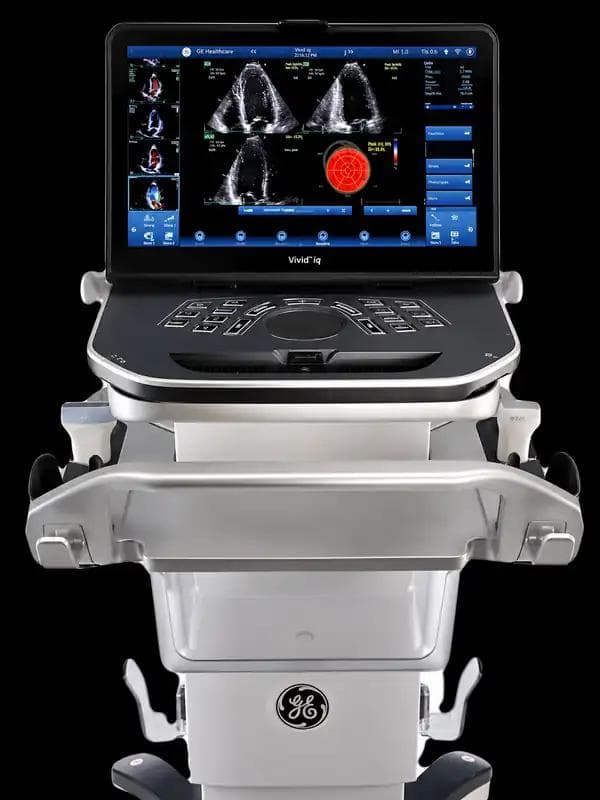
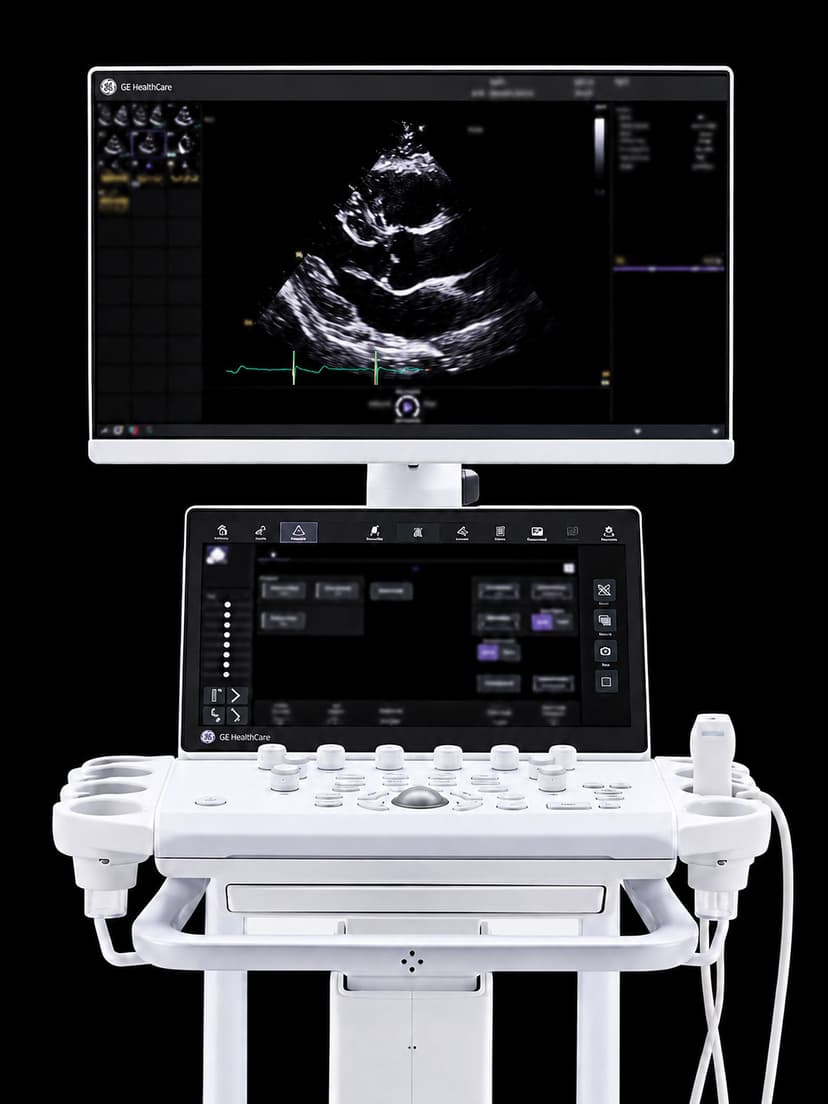
InterventionalICE (Intracardiac Echocardiography) on the GE Vivid IQ provides real-time imaging from inside the heart during catheter-based procedures such as atrial fibrillation ablation, septal defect closure, and left atrial appendage occlusion. The ICECord-RS adapter with ferrite filter connects AcuNav and SoundStar ICE catheter probes to the Vivid IQ Premium and Vivid IQ 4D systems. This gives interventional cardiologists and electrophysiologists direct visualization of cardiac structures, catheter positioning, and device deployment without relying on fluoroscopy or transesophageal echo.

Key Benefits
Why ICE matters
Real-time visualization during catheter procedures
ICE provides direct imaging of cardiac anatomy and catheter position from inside the heart. Interventionalists see the transseptal puncture site, ablation catheter contact, and device deployment in real time without relying on fluoroscopy.
Reduced dependence on fluoroscopy and TEE
ICE imaging decreases radiation exposure for both patient and operator by reducing fluoroscopy time. It also eliminates the need for general anesthesia required for transesophageal echo guidance in many structural procedures.
Compatible with AcuNav and SoundStar ICE catheters
The ICECord-RS adapter supports both the AcuNav phased array catheter for standard 2D ICE and the SoundStar catheter for 3D intracardiac imaging, covering the full range of ICE-guided procedures.
Portable ICE capability for multi-room labs
The Vivid IQ's laptop form factor means ICE capability travels with the system. Electrophysiology labs running procedures in multiple rooms or at satellite locations get ICE imaging without a dedicated fixed ultrasound in each space.
About ICE
Intracardiac echocardiography places a small ultrasound transducer directly inside the heart via a catheter inserted through the femoral vein. This provides imaging angles and proximity to cardiac structures that transthoracic and transesophageal approaches cannot match. ICE is used routinely during electrophysiology procedures to visualize the fossa ovalis for transseptal puncture, monitor catheter contact during ablation, and confirm device placement during structural heart interventions. On the Vivid IQ, ICE requires the ICE probe interface software and the ICECord-RS probe adapter, which includes a ferrite filter to suppress electromagnetic interference and maintain signal quality in the electrically noisy catheterization lab environment. The system supports both the AcuNav phased array ICE catheter and the SoundStar 3D ICE catheter, providing 2D, color Doppler, and in some configurations 3D intracardiac imaging. For electrophysiology labs, having ICE capability on a portable Vivid IQ means the ultrasound can be brought into any procedure room rather than requiring a dedicated fixed system. This flexibility is particularly valuable for labs that perform procedures in multiple rooms or at satellite facilities.
Our Partners


















Want ICE in your practice?
Request a quote for a system that includes this feature.