
GE Ultrasound Feature
Image Optimization
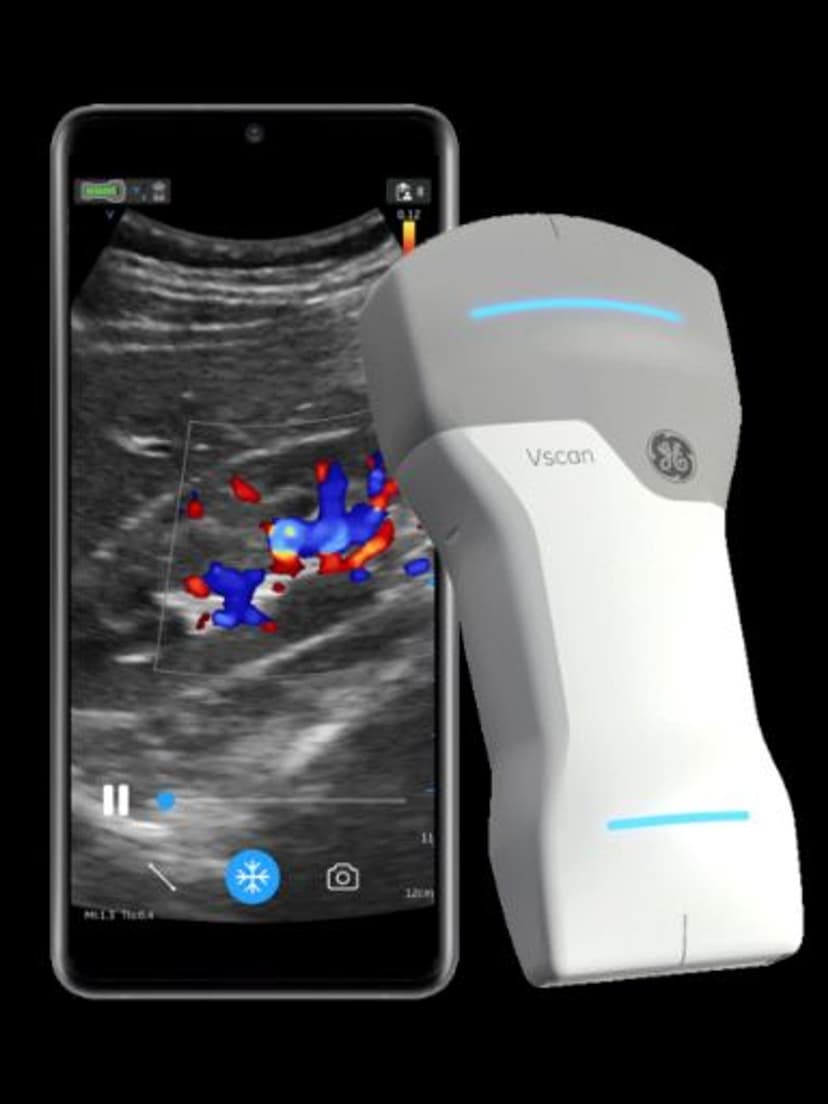
Imaging TechnologyImage Optimization on the GE Vscan Air uses AI to automatically adjust imaging parameters including brightness, contrast, and sharpness in real time. Because the Vscan Air is a handheld device used at the point of care, operators often scan across different anatomies and patient types without time to manually fine-tune settings. Image Optimization handles those adjustments automatically, maintaining diagnostic-quality images whether the clinician is performing a cardiac assessment, checking for free fluid, or evaluating a vascular structure. The feature reduces the technical barrier for clinicians who use ultrasound as a diagnostic aid rather than as their primary specialty.

Key Benefits
Why Image Optimization matters
Diagnostic-quality images without manual tuning
The AI continuously adjusts brightness, contrast, and sharpness based on the anatomy being scanned. Clinicians get usable images without stopping to adjust gain curves or dynamic range settings.
Consistent results across clinical scenarios
Whether assessing cardiac function, checking for pleural effusion, or guiding vascular access, Image Optimization adapts to each application automatically. One device, consistent quality across uses.
Accessible for non-sonographer clinicians
Emergency physicians, hospitalists, and primary care providers who use ultrasound as a diagnostic tool rather than their primary specialty can produce quality images without extensive ultrasound training.
Faster point-of-care assessments
At the bedside, every second counts. Automatic image optimization eliminates the time spent adjusting settings between different anatomical views, keeping the clinical assessment moving.
About Image Optimization
Handheld ultrasound presents a unique challenge: the device must produce diagnostic-quality images across a wide range of clinical scenarios with minimal user input. Unlike cart-based systems where experienced sonographers spend time optimizing image parameters, point-of-care users need results quickly and may not have the ultrasound training to know which settings to adjust. Image Optimization addresses this by continuously monitoring the incoming ultrasound data and adjusting gain, dynamic range, and edge enhancement to match the tissue being scanned. The AI adapts to changes in depth, tissue density, and probe orientation without requiring the user to access menus or adjust sliders. For emergency medicine physicians, hospitalists, and primary care providers who rely on the Vscan Air for bedside assessment, this means spending less time on image quality troubleshooting and more time on clinical decision-making. The feature works across B-mode and color Doppler applications on both the linear and phased array elements of the dual-probe Vscan Air.
Our Partners


















Want Image Optimization in your practice?
Request a quote for a system that includes this feature.