
GE Ultrasound Feature
Patient Comfortable
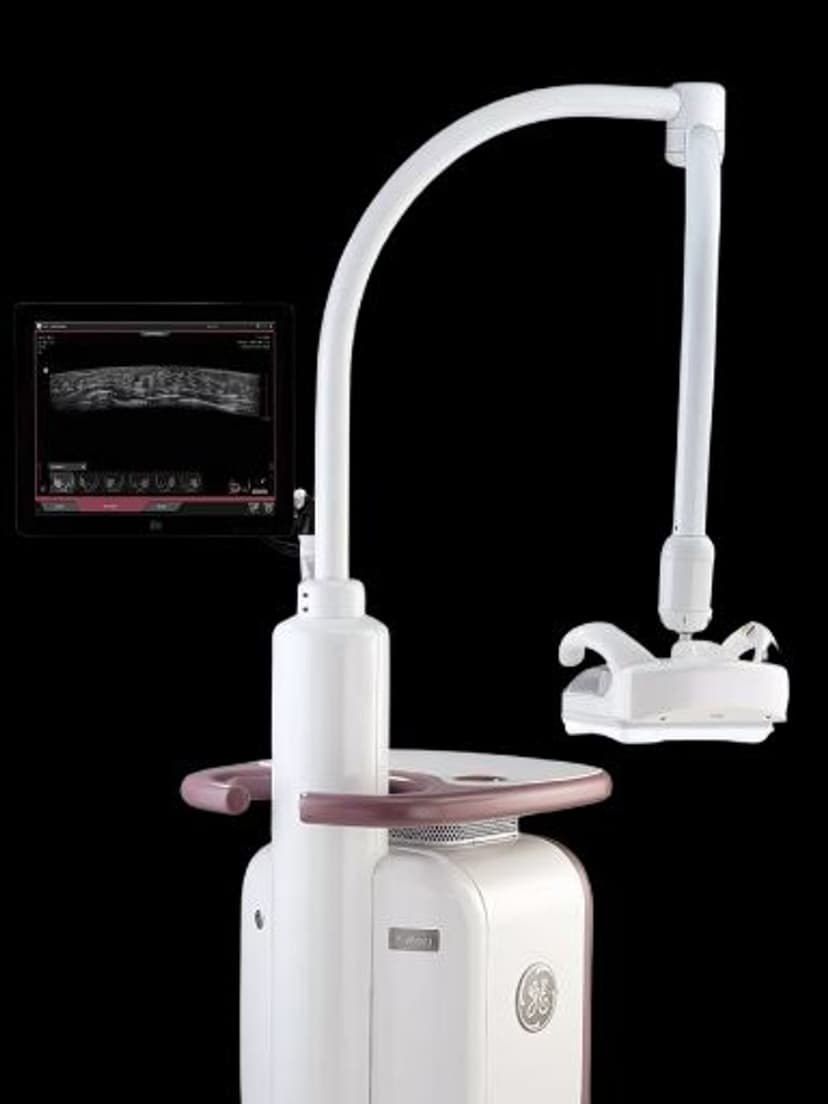
HardwarePatient Comfort on the Invenia ABUS is a response to one specific problem: women skip or delay breast screening because mammography is painful. ABUS eliminates the compression step entirely. The patient lies supine with a curved transducer resting on the breast at a light, consistent pressure while the system scans automatically through the tissue. There is no operator repeatedly repositioning a handheld probe, no repeated compression applications, and no standing still in a clamped position. For women with dense breast tissue who need supplemental screening beyond mammography, the experience is closer to a physical exam than to a radiographic procedure.

Key Benefits
Why Patient Comfortable matters
Improves return-visit adherence for annual screening
Patients who found their first screening tolerable come back the next year without needing to be chased or rescheduled. For dense-breast patients who need supplemental ABUS on top of mammography, adherence is the metric that determines whether the screening program catches early cancers or not.
Reduces pre-exam anxiety for compression-averse patients
Women who avoided or delayed mammography because of pain history arrive at ABUS appointments with lower anxiety, shorter pre-exam conversations, and fewer day-of cancellations. Front-desk staff spend less time reassuring patients that the exam won't hurt.
Opens screening to patients who can't tolerate mammography at all
Patients with chest wall pain, recent biopsy, post-mastectomy reconstruction, severe arthritis, or limited shoulder mobility often cannot complete a compression mammogram. ABUS is one of the only supplemental screening paths still available to them.
Comfort without a diagnostic trade-off
Standardized automated scanning produces imaging datasets that a radiologist reads the same way regardless of how still the patient held during acquisition. Patients don't have to choose between a comfortable exam and a thorough one, because the automated protocol delivers both.
About Patient Comfortable
The transducer on an ABUS system is wide enough to cover an entire breast quadrant in a single automated pass, which means the patient stops and holds position fewer times than during a handheld ultrasound exam. The curved transducer face shapes to the natural curvature of the breast rather than requiring the breast to conform to a flat surface, reducing the localized pressure that makes handheld breast ultrasound uncomfortable for longer exams. Exam duration is typically around 15 minutes per patient, compared with variable handheld scan times that can stretch far longer for dense-breast screening. Because the scan is automated, the technologist is not continuously leaning over the patient to reposition a probe, which also makes the room atmosphere feel less clinical and more like a brief lie-down. The sum of these decisions separates ABUS from both mammography and handheld breast ultrasound on the dimension patients actually care about.
Availability
Available on these systems
Our Partners


















Want Patient Comfortable in your practice?
Request a quote for a system that includes this feature.