
GE Ultrasound Feature
Shock Toolkit
WorkflowThe Shock Toolkit is a purpose-built assessment package on GE Venue ultrasound machines that structures the point-of-care evaluation of hemodynamically unstable patients. It bundles three automated measurement tools (Auto VTI for cardiac output estimation, Auto IVC for volume status, and Auto B-Lines for pulmonary fluid assessment) into a guided workflow that follows RUSH (Rapid Ultrasound in Shock) protocol principles. The toolkit guides clinicians through heart, lung, and IVC evaluation in a logical sequence, with automated measurements at each step. Emergency physicians, intensivists, and hospitalists use the Shock Toolkit to differentiate between hypovolemic, cardiogenic, distributive, and obstructive shock at the bedside without waiting for formal echocardiography or CT imaging.

Key Benefits
Why Shock Toolkit matters
Structured RUSH protocol at the bedside
The toolkit organizes heart, lung, and IVC assessment into a guided sequence that follows RUSH protocol principles. Clinicians move through each step without manually configuring measurement tools, ensuring a complete hemodynamic evaluation even under time pressure.
Three automated measurements in one workflow
Auto VTI, Auto IVC, and Auto B-Lines each use AI to deliver measurements that normally require manual optimization and caliper placement. Running all three in a single guided workflow produces a hemodynamic profile in minutes rather than the 15-20 minutes a manual assessment would take.
Accessible to non-sonographer operators
The touchscreen-guided interface and automated measurements make the Shock Toolkit usable by emergency physicians, intensivists, and hospitalists who do not perform ultrasound as their primary clinical activity. The system handles the technical measurement steps so the clinician can focus on clinical interpretation.
Differentiate shock etiology before lab and imaging results return
Distinguishing between hypovolemic, cardiogenic, distributive, and obstructive shock determines initial treatment. The Shock Toolkit provides this differentiation at the bedside within minutes of patient arrival, before blood work, CT scans, or formal echocardiography results are available.
About Shock Toolkit
The Shock Toolkit organizes the bedside assessment of undifferentiated shock into three automated components. Auto VTI measures the velocity-time integral at the left ventricular outflow tract to estimate stroke volume and cardiac output, helping identify cardiogenic shock. Auto IVC measures inferior vena cava diameter and collapsibility to assess intravascular volume status and fluid responsiveness, relevant for hypovolemic and distributive shock. Auto B-Lines counts and grades B-line artifacts in the lung fields to detect pulmonary edema or effusion, which can indicate cardiogenic or distributive causes. Each tool uses AI to automate measurements that would otherwise require manual image optimization, caliper placement, and calculation. The toolkit presents these assessments in a structured sequence on the Venue touchscreen interface, so the clinician moves through heart, IVC, and lung evaluation without configuring each measurement separately. This structured approach addresses a key challenge in emergency ultrasound: clinicians under time pressure may skip assessment components or forget to evaluate all three systems. The Shock Toolkit ensures a complete evaluation by design. The combination of automated measurements and guided workflow makes the toolkit accessible to emergency physicians and hospitalists who use POCUS as part of their clinical assessment rather than as a dedicated imaging service.
Availability
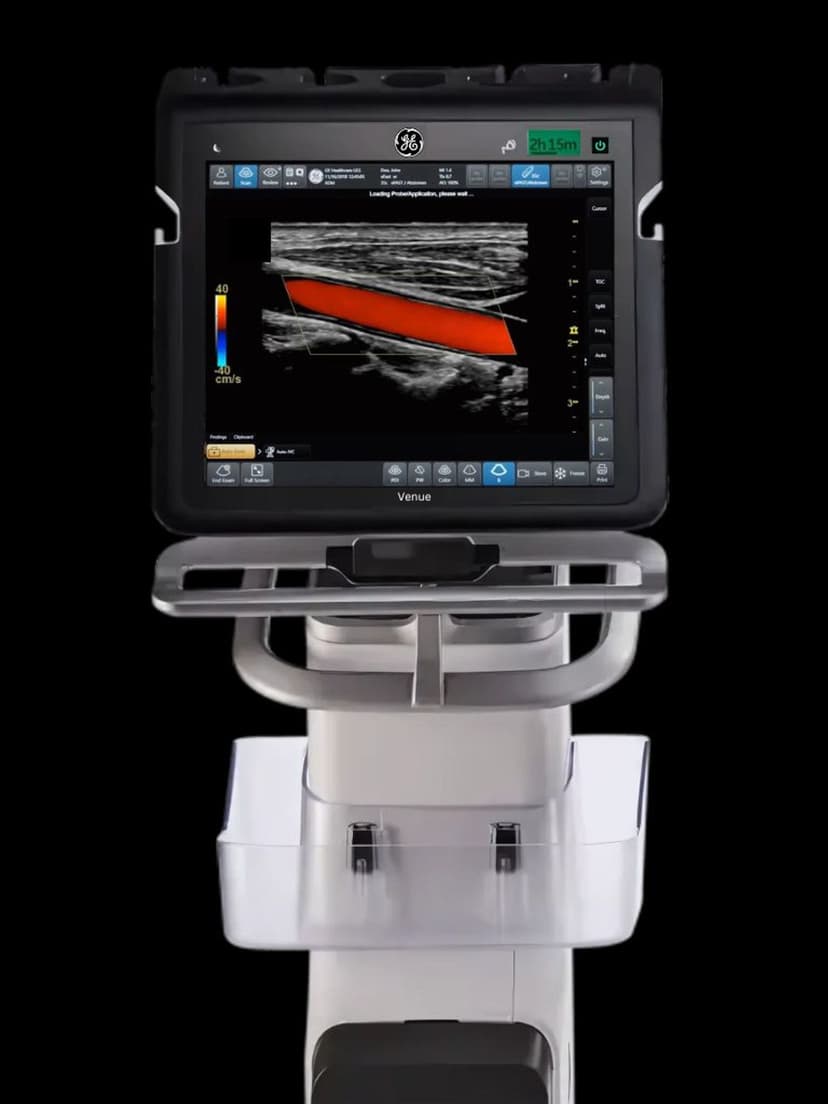
Available on these systems
Our Partners
















Want Shock Toolkit in your practice?
Request a quote for a system that includes this feature.