
GE Ultrasound Feature
Smart Doppler
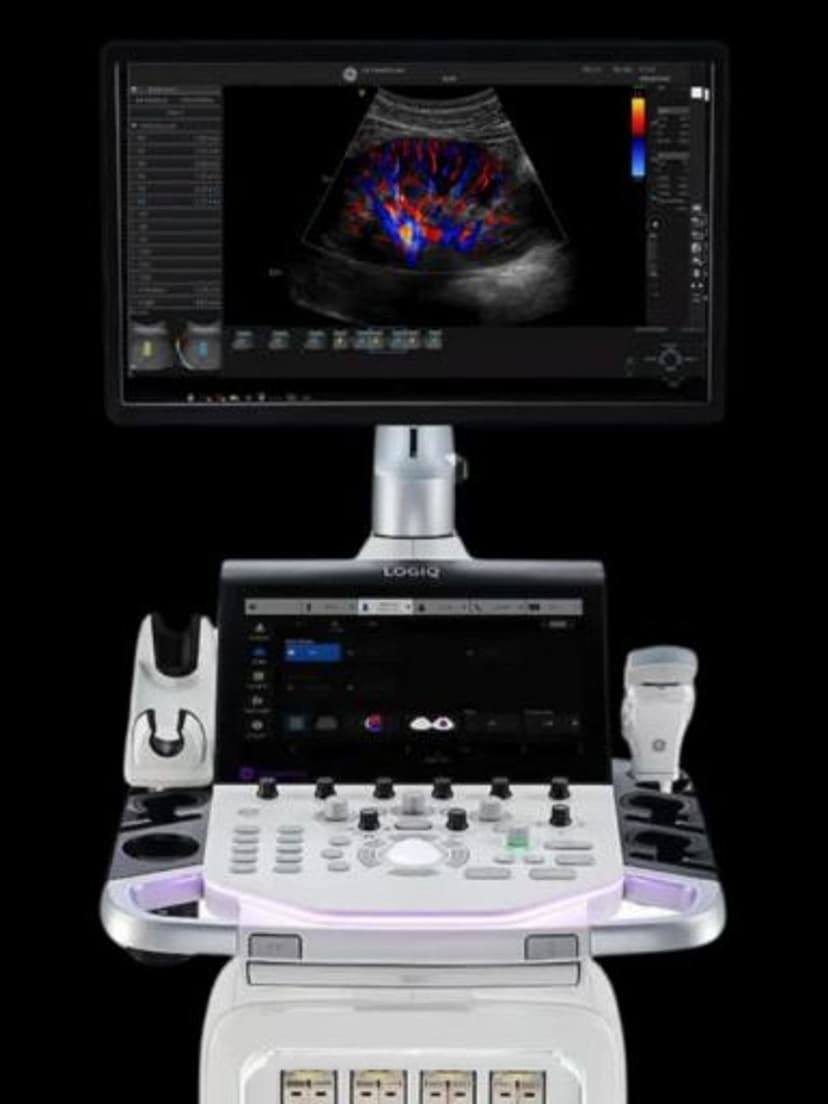
AI & AutomationSmart Doppler automatically adjusts Doppler acquisition parameters including gain, velocity scale, and angle correction based on real-time analysis of blood flow data. Available on the GE LOGIQ Totus, this feature reduces the manual adjustments that sonographers typically perform during every Doppler measurement. The system analyzes the incoming flow signal and optimizes settings to display clear spectral waveforms and accurate velocity data without requiring the operator to fine-tune each parameter. This automation is valuable in vascular labs and general imaging departments where Doppler measurements are performed frequently across different vessel types and flow conditions.

Key Benefits
Why Smart Doppler matters
Automated gain, scale, and angle optimization
Smart Doppler analyzes the flow signal and adjusts all three key parameters without manual intervention. This eliminates the iterative adjust-and-check cycle that sonographers perform for every Doppler measurement.
Accurate velocity measurements across vessel types
Whether measuring high-velocity carotid flow or slower venous return, the system adapts the velocity scale and gain to display clean spectral waveforms. This reduces aliasing artifacts and ensures velocity values reflect actual hemodynamics.
Consistent Doppler quality across operators
The automated optimization applies the same algorithm regardless of operator experience level. This standardizes Doppler measurement quality across your entire sonography team, reducing the variability that manual settings introduce.
Higher throughput in vascular lab workflows
Vascular studies require dozens of Doppler measurements across multiple vessels. By automating the parameter adjustments for each measurement, Smart Doppler saves cumulative minutes per exam that translate to additional patient slots per day.
About Smart Doppler
Doppler ultrasound requires precise parameter settings for accurate velocity measurement. Gain must be high enough to detect the flow signal but low enough to avoid noise. The velocity scale must match the expected flow speed to avoid aliasing or undersampling. Angle correction must align with the vessel orientation for accurate absolute velocity values. In practice, sonographers adjust these parameters multiple times per exam, and the optimal settings change with every vessel and every patient. Smart Doppler handles these adjustments automatically by analyzing the spectral data in real time. The system detects the peak velocity range and adjusts the scale accordingly, optimizes gain to maximize signal-to-noise ratio, and calculates the appropriate angle correction based on vessel orientation. This reduces inter-operator variability because the system applies the same optimization logic regardless of who performs the exam. For busy vascular labs processing carotid, lower extremity, and abdominal vascular studies throughout the day, Smart Doppler keeps exam quality consistent while reducing the technical burden on staff.
Our Partners









Want Smart Doppler in your practice?
Request a quote for a system that includes this feature.