
GE Ultrasound Feature
V-Live 2.0
OB/GYNV-Live 2.0 is GE's real-time volume rendering technology that produces lifelike 3D/4D images of fetal anatomy during live scanning. Unlike static 3D captures that require post-processing, V-Live 2.0 renders surface detail continuously as the clinician scans, allowing immediate assessment of fetal facial features, limb positioning, and structural anatomy. The technology works alongside GE's HDlive rendering engine to produce smooth, natural-looking images that aid both clinical evaluation and parent bonding during obstetric exams.

Key Benefits
Why V-Live 2.0 matters
Live rendered fetal images without post-processing delays
V-Live 2.0 renders 3D/4D surface images in real time as you scan. There is no need to stop, acquire a volume sweep, and then wait for the system to render. The rendered image updates continuously, keeping pace with probe movement and fetal motion.
Surface detail for clinical assessment of fetal anatomy
The rendering engine produces enough surface detail to evaluate facial structures, limb positioning, and potential surface anomalies like cleft lip. Clinicians can rotate and reposition the rendered view live, examining anatomy from multiple angles during a single scan.
Parent engagement during obstetric exams
The lifelike rendered images give parents a recognizable view of their baby during the exam. This visual connection improves the patient experience and helps sonographers explain findings in terms parents can understand.
Multi-specialty value on a shared platform
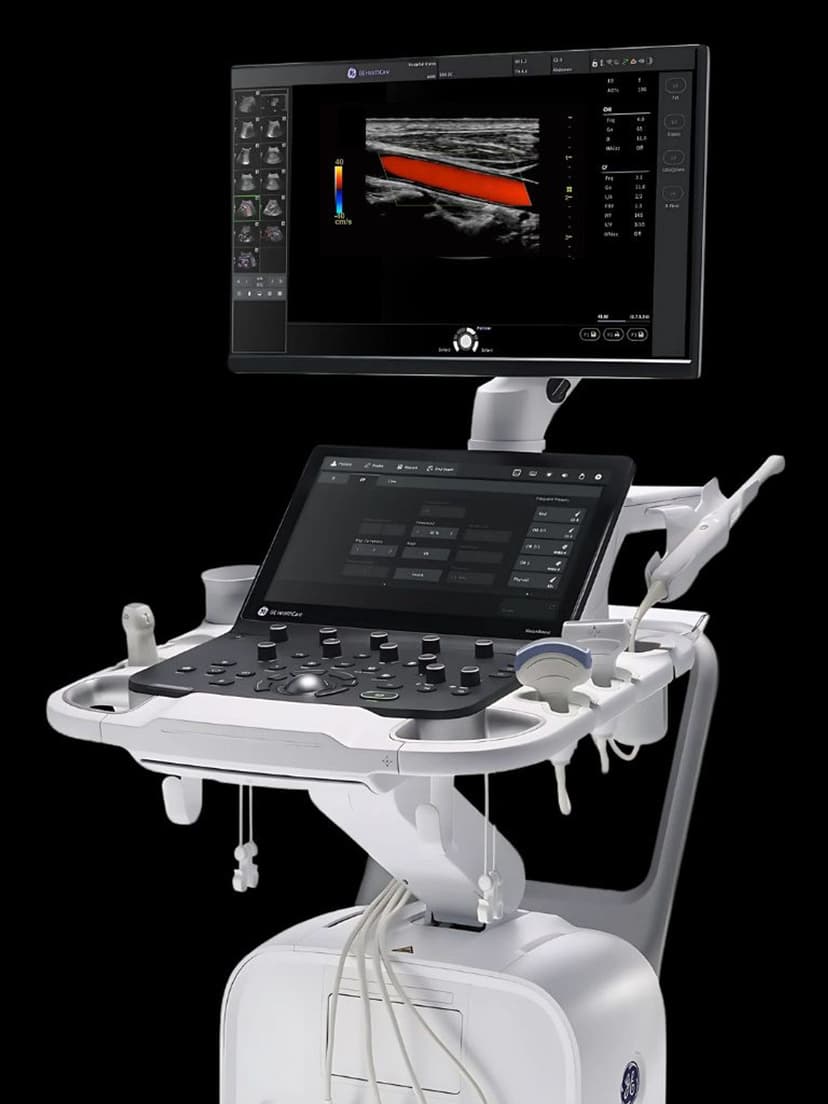
V-Live 2.0 is available on Versana systems that also handle general imaging, vascular, and cardiac exams. Practices that need OB/GYN capability alongside other specialties get fetal rendering without dedicating a separate machine to obstetrics.
About V-Live 2.0
V-Live 2.0 applies real-time volume rendering algorithms to 3D/4D acquisition data as it streams from the transducer. The system processes returning echo data through surface-rendering pipelines that calculate light source positioning, shadow depth, and tissue surface contours on the fly. This differs from conventional 3D rendering, which typically requires the sonographer to acquire a volume sweep and then render it after the fact. With V-Live 2.0, the rendered image updates continuously, so clinicians can reposition the probe and see the rendered output change in real time. The feature is used primarily in second- and third-trimester obstetric exams to evaluate fetal face, hands, feet, and spine. It also supports clinical assessment of surface abnormalities such as cleft lip. For parents, V-Live 2.0 produces the recognizable "baby pictures" that make the exam more engaging. On compatible Versana systems, V-Live 2.0 pairs with volume probes to deliver this rendering capability in a multi-specialty platform that also handles general imaging and cardiac applications.
Availability
Available on these systems
Our Partners


















Want V-Live 2.0 in your practice?
Request a quote for a system that includes this feature.