
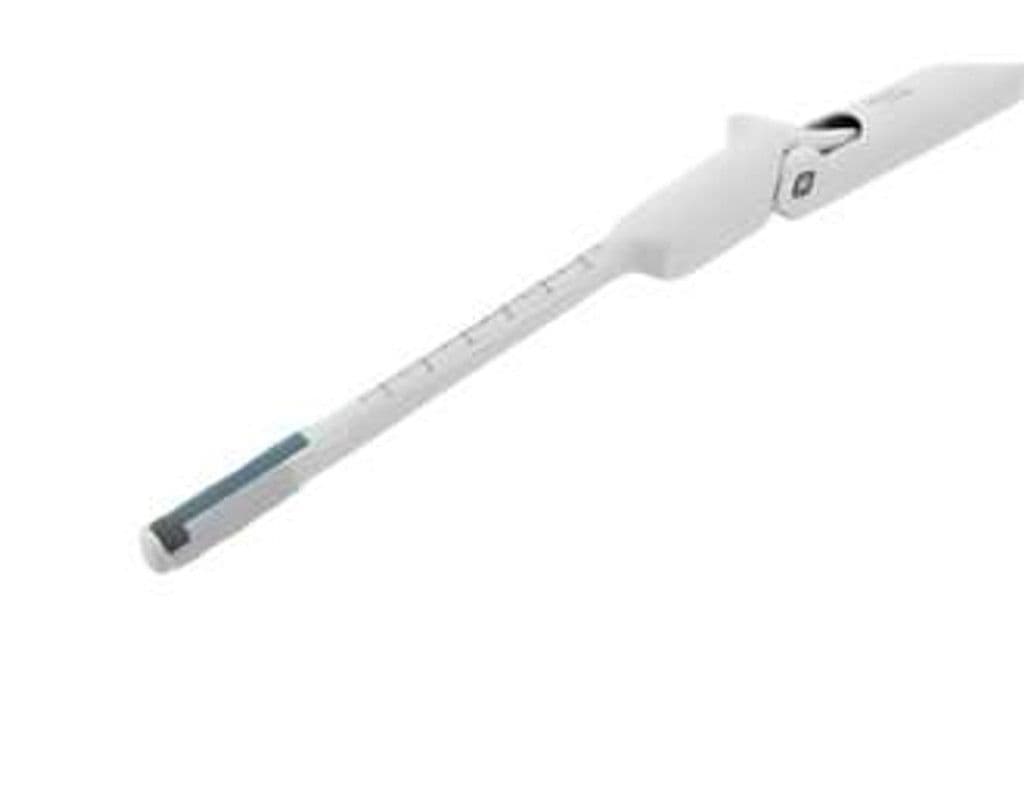
GE E7C8L-RS
The E7C8L-RS integrates two imaging surfaces in one probe: a microconvex element (17.2 x 10.3 mm) with a 136-degree field of view for wide-angle pelvic coverage, and a linear element (57.6 x 9.1 mm) for high-resolution targeted imaging. This dual design eliminates the need to swap transducers during transrectal prostate exams. Biopsy guide compatibility (H40202E) supports needle-guided procedures directly through either imaging surface.
Specifications
Mid-to-high frequency range balances resolution of prostate tissue detail with penetration for deeper pelvic structures.
Wide sector angle covers the entire prostate gland and surrounding anatomy in one view.
Linear aperture provides high-resolution sagittal imaging for targeted biopsy guidance.
Compact microconvex element fits within the rectal canal for transrectal imaging.
Extended linear footprint captures prostate peripheral zone and seminal vesicles.
Adequate penetration for full pelvic floor and bladder wall visualization.
Dedicated biopsy guide enables systematic transrectal prostate sampling.
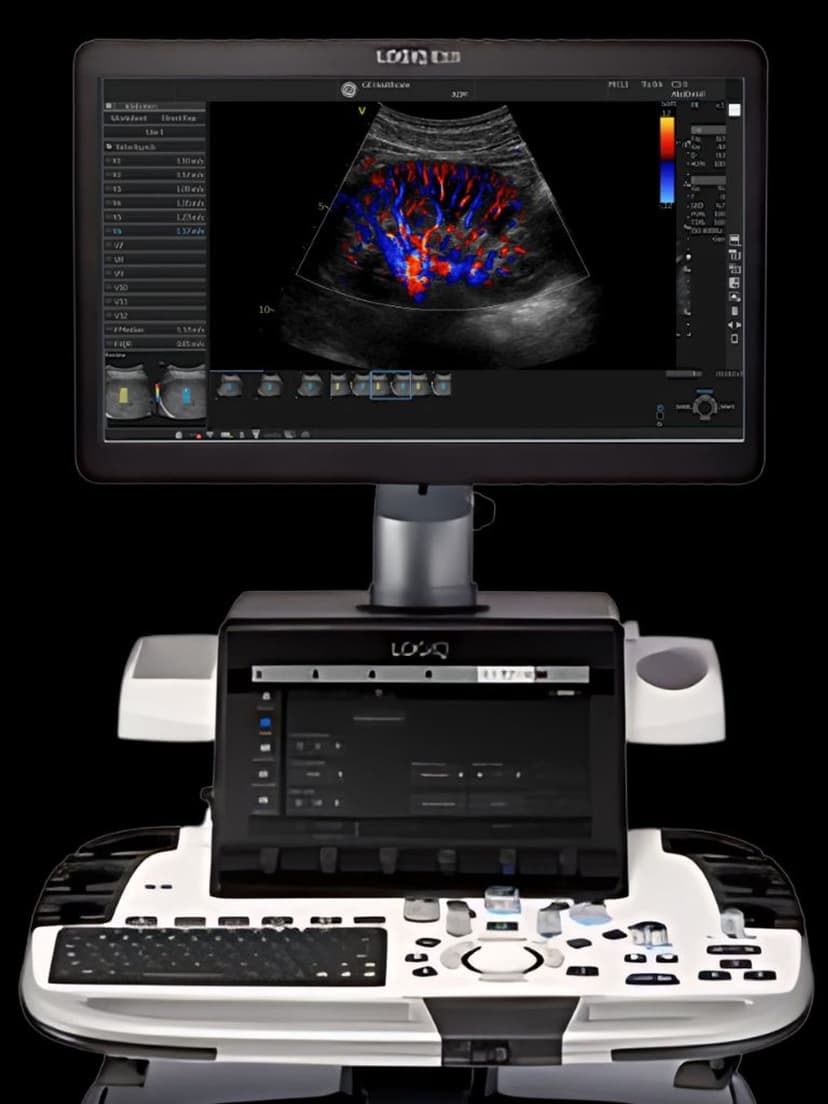
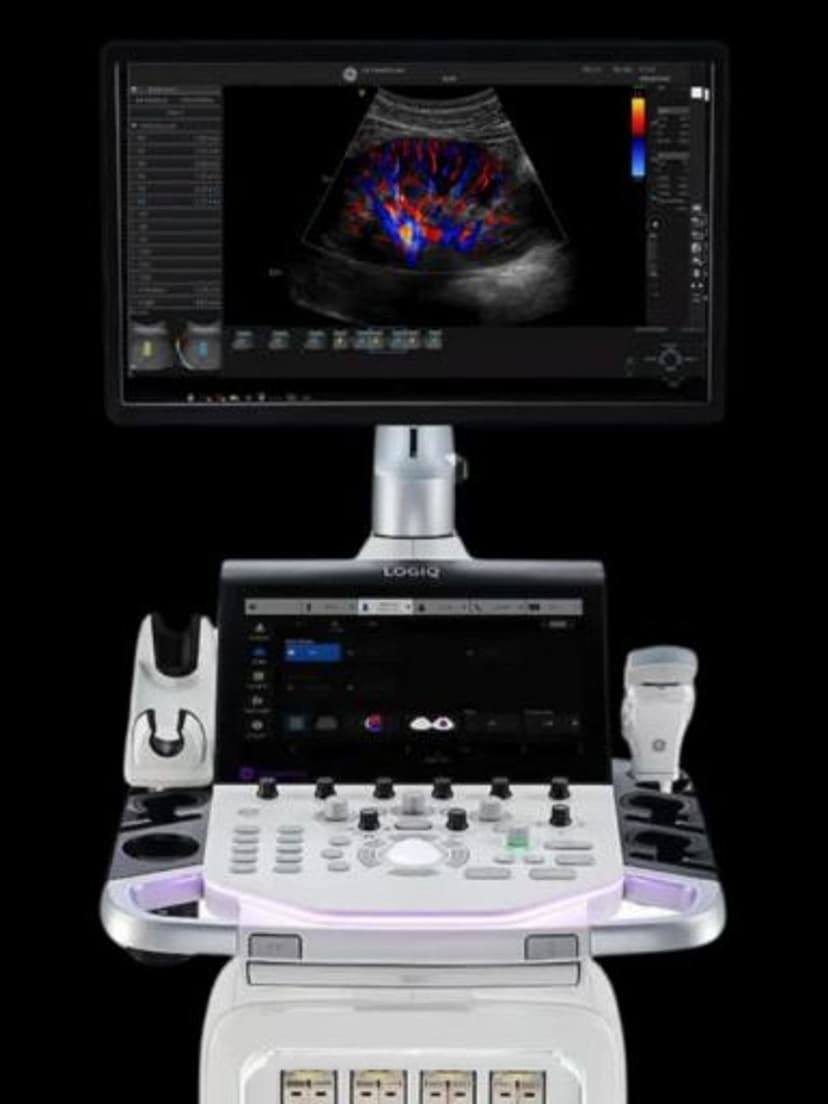
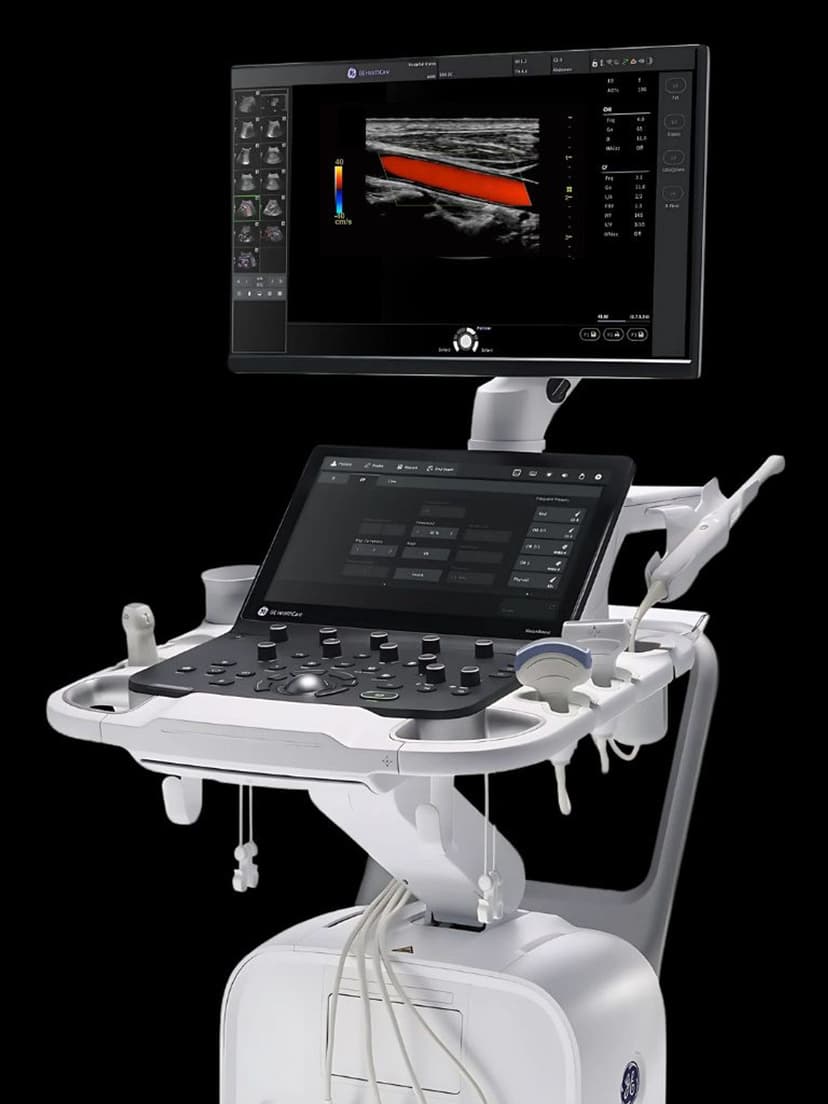
RS-Pin interface connects to GE LOGIQ and Versana general imaging platforms.
Applications
Transrectal Prostate Imaging
The microconvex array provides a 136-degree sector view of the entire prostate gland, while the linear array delivers high-resolution sagittal images of the peripheral zone where most malignancies arise. Switching between views is instantaneous since both arrays are on a single probe shaft. PW Doppler detects abnormal vascularity patterns associated with suspicious lesions.
Biopsy Guidance
Compatible with the H40202E biopsy guide, the E7C8L-RS supports systematic and targeted needle placement during transrectal biopsies. The linear array's 51.2 mm aperture tracks the needle path in real time, confirming accurate sampling from mapped regions. Color Doppler overlay helps avoid vascular structures during needle advancement.
Pelvic Floor Assessment
The wide-angle microconvex view captures pelvic floor anatomy including the levator ani and puborectalis during rest, Valsalva, and contraction maneuvers. The 5–10 MHz bandwidth balances resolution for superficial perineal structures with penetration for deeper pelvic compartments, supporting staging of prolapse and assessment of post-surgical anatomy.
Our Partners


















Need this probe for your system?
Request a quote with pricing, compatibility verification, and delivery timeline.