
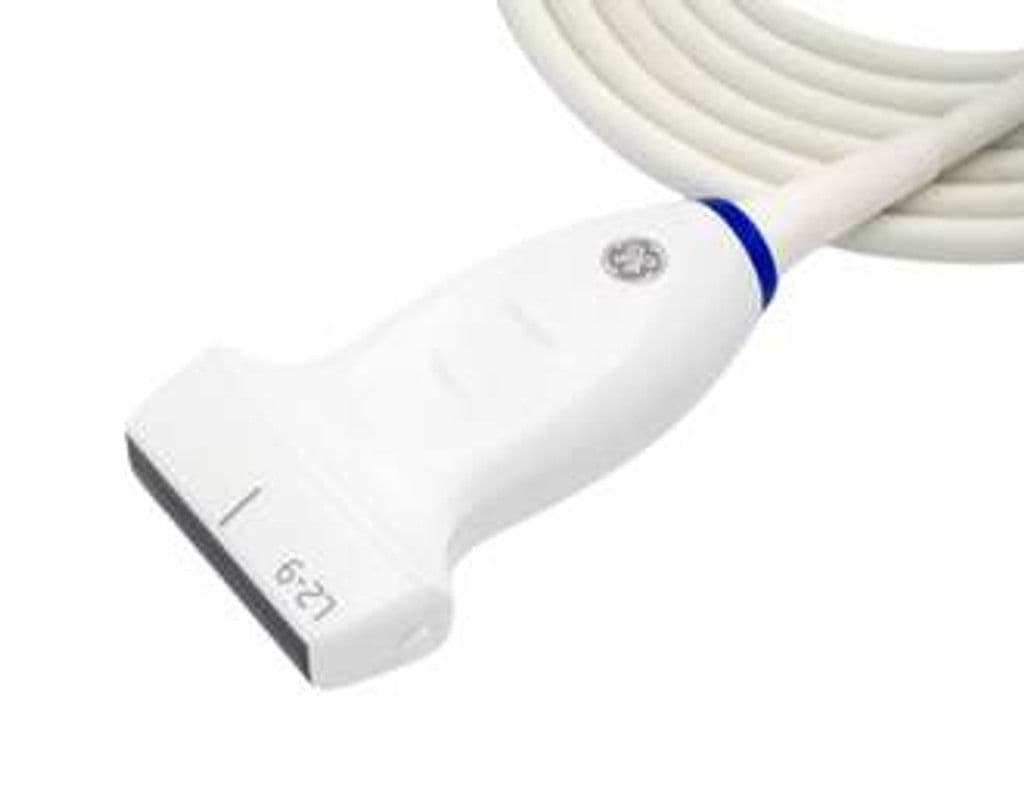
GE L2-9-D
The L2-9-D uses XDclear single-crystal technology to extract maximum sensitivity from its 2–9 MHz bandwidth, producing cleaner images at depth than conventional piezoelectric linear arrays. The 2 MHz floor gives it enough penetration for pediatric abdominal surveys and deeper peripheral vascular structures, while 9 MHz handles standard superficial MSK and small parts work. D-Pin connectivity limits it to the LOGIQ E10 and LOGIQ Fortis, where it pairs with advanced beamforming to take full advantage of the XDclear element architecture.
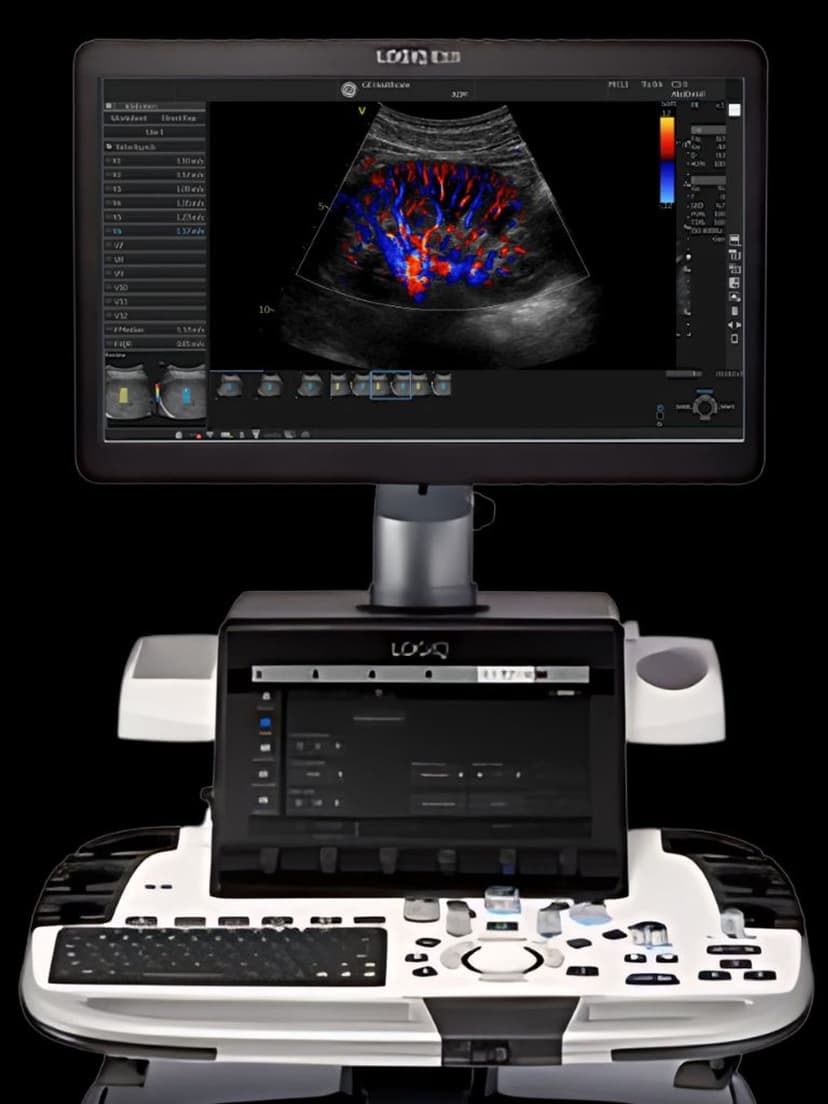
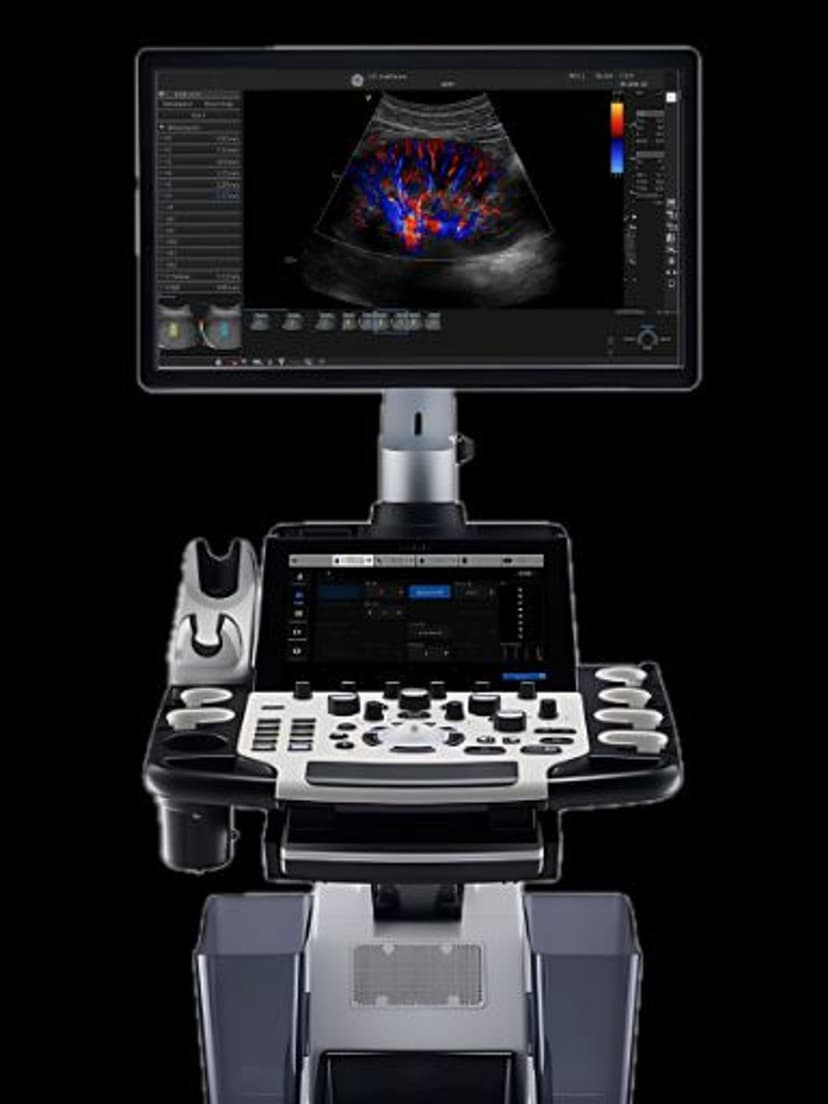
Compatible Systems
Specifications
Extended bandwidth with XDclear technology covers deep vascular structures through superficial MSK imaging.
Single-crystal piezoelectric elements deliver wider bandwidth and improved sensitivity compared to conventional materials.
Standard linear aperture covers most MSK targets and provides adequate field of view for vascular work.
Full diagnostic mode set for anatomic and hemodynamic assessment across clinical applications.
D-Pin interface connects to GE's flagship LOGIQ E10 and LOGIQ Fortis systems.
Applications
Musculoskeletal Imaging
XDclear single-crystal elements improve signal-to-noise ratio for visualizing tendon fiber patterns, ligament integrity, and muscle architecture at depths where conventional linear arrays lose contrast. Dynamic scanning of the shoulder rotator cuff, knee extensor mechanism, and ankle tendons benefits from the improved penetration at 2–5 MHz for deeper structures. The 38.4 mm aperture covers the width of most musculoskeletal targets in a single field of view.
Vascular Assessment
The 2 MHz low end provides the penetration needed for iliac and deep femoral vessel imaging that is typically beyond the range of standard high-frequency linears. Carotid duplex scanning at 7–9 MHz delivers the resolution for intima-media thickness measurement and plaque characterization. XDclear technology improves Doppler sensitivity for detecting low-flow states in venous insufficiency and post-thrombotic recanalization.
Pediatric Imaging
The extended low-frequency range at 2 MHz provides adequate penetration for pediatric abdominal surveys where a linear geometry is preferred over convex. Pyloric stenosis measurement, appendicitis screening, and bowel assessment benefit from the linear probe's consistent depth calibration. On the LOGIQ Fortis, XDclear elements paired with advanced harmonic imaging reduce clutter in difficult pediatric scanning scenarios.
Our Partners


















Need this probe for your system?
Request a quote with pricing, compatibility verification, and delivery timeline.