
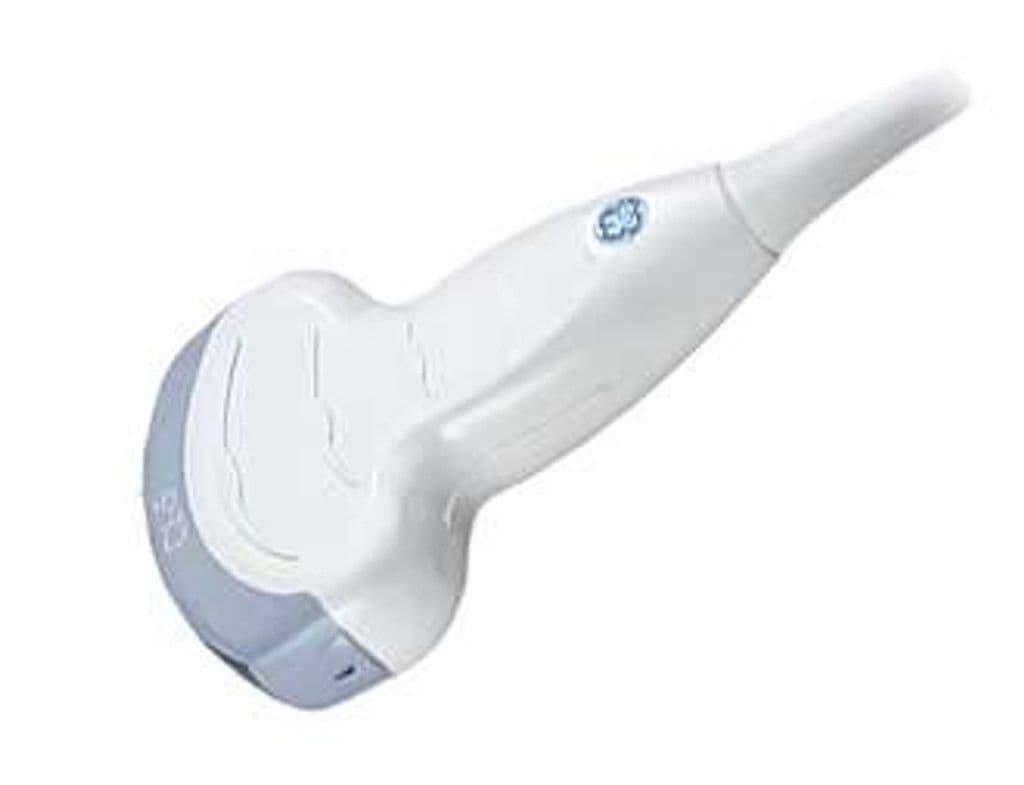
GE C1-5-D
The C1-5-D is a full-size convex array transducer with a 2.0 – 5.0 MHz bandwidth, 60-degree field of view, and 30 cm maximum depth. It handles the full range of abdominal imaging including liver, kidney, aorta, and retroperitoneal structures, plus transabdominal OB/GYN and urological exams. The 1.0 MHz low end provides the penetration needed for technically difficult patients, while the wideband design maintains resolution at shallower depths for gallbladder and renal cortex detail.
Compatible Systems
Specifications
Low-frequency penetration handles large patients while wideband design preserves resolution at shallow depths.
Standard convex sector angle for abdominal organ surveys and obstetric scanning.
Deep imaging range accommodates large body habitus and retroperitoneal structures.
Doppler modes support abdominal vascular assessment and obstetric flow measurements.
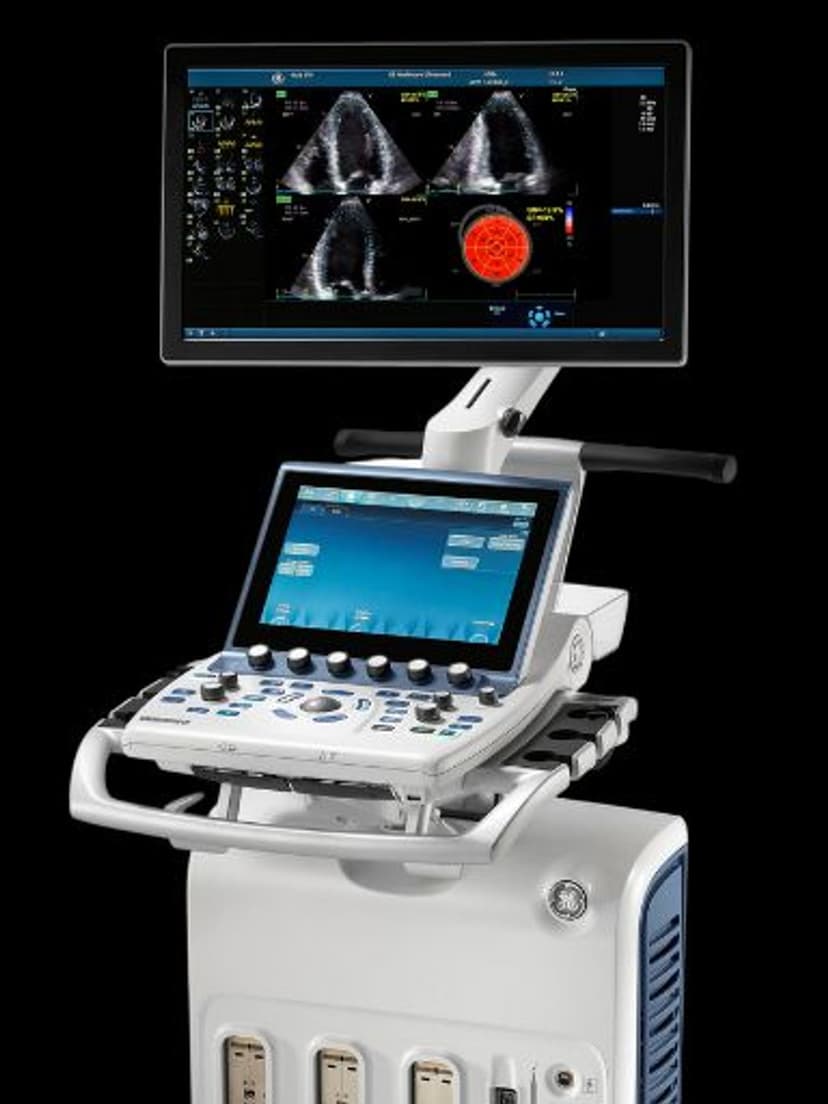
D-Pin connector for the Vivid S70 cardiovascular and general imaging platform.
Applications
Abdominal Imaging
The C1-5-D covers standard abdominal survey protocols including liver parenchyma evaluation, gallbladder assessment, renal imaging, and aortic screening. The 30 cm depth range accommodates large patients, and the 60-degree field of view provides the scanning coverage needed for systematic organ surveys. Color Doppler supports hepatic and renal vascular assessment and aortic aneurysm screening.
Transabdominal OB/GYN
For second and third-trimester obstetric imaging, the C1-5-D provides fetal biometry, anatomic survey, and placental localization. The wideband design resolves fetal anatomy at the higher frequencies while the 1.0 MHz low end maintains image quality through increased maternal habitus. In GYN applications, the probe images uterine and ovarian pathology transabdominally when endocavitary access is not indicated.
Urological and Pelvic Assessment
The C1-5-D supports transabdominal bladder volume measurement, renal obstruction evaluation, and post-void residual assessment. The deep penetration range is particularly useful for evaluating hydronephrosis and renal calculi in larger patients where higher-frequency probes lose signal. PW Doppler quantifies renal artery resistive indices for transplant monitoring and renovascular assessment.
Our Partners


















Need this probe for your system?
Request a quote with pricing, compatibility verification, and delivery timeline.