
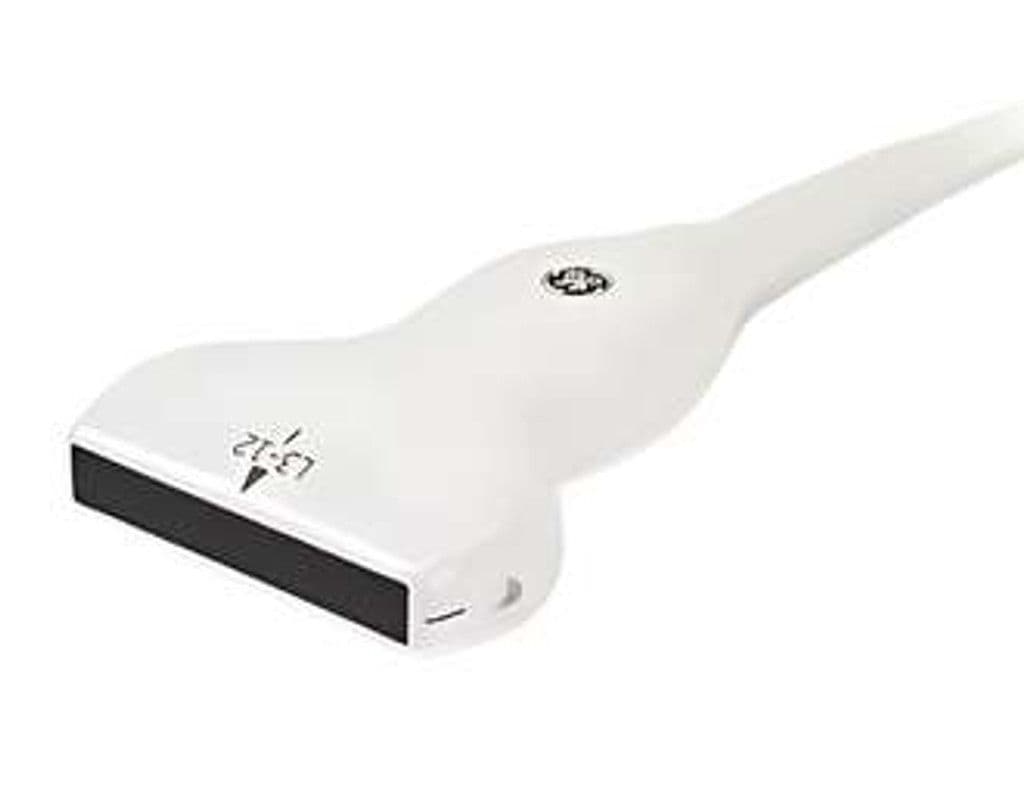
GE L3-12-RS
The L3-12-RS pairs a 51 mm aperture with 3.6–12 MHz bandwidth, reaching mid-depth abdominal structures that most high-frequency linear probes cannot. This dual-purpose capability lets a single transducer cover superficial thyroid and breast exams as well as pediatric abdominal scans without switching probes. The slim linear footprint maintains access to tight scan windows like the supraclavicular fossa and pediatric intercostal spaces.
Specifications
Wideband range bridges superficial small parts imaging and mid-depth pediatric abdominal work in one probe.
Wide field of view captures full carotid bifurcation and thyroid lobes without panoramic stitching.
Sufficient penetration for pediatric abdominal organs and deeper vascular structures.
Standard mode set supports morphologic assessment and hemodynamic quantification.
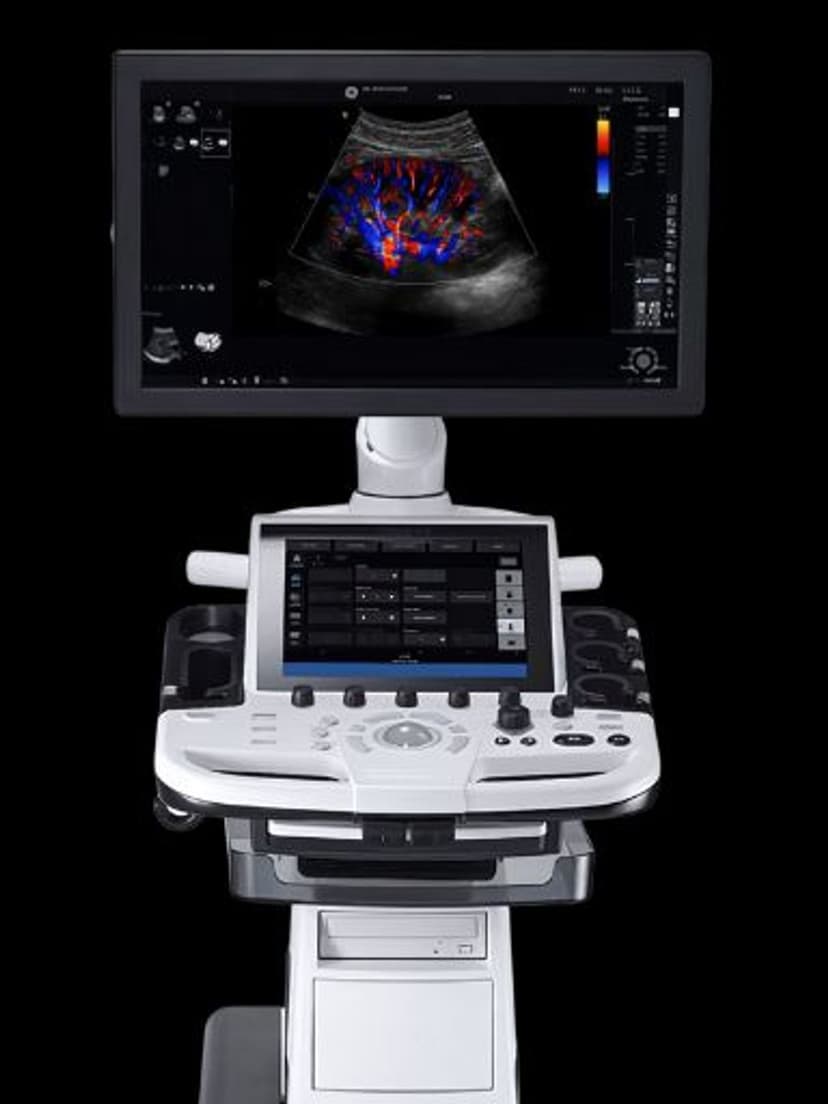
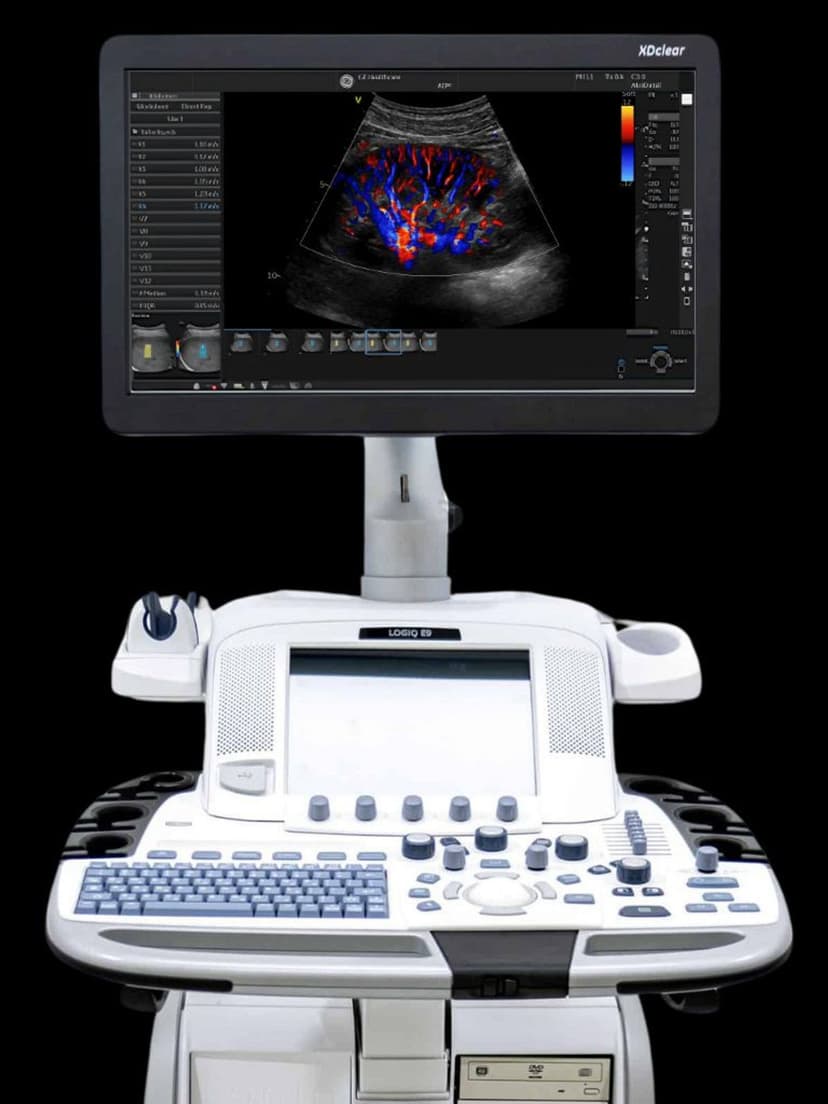
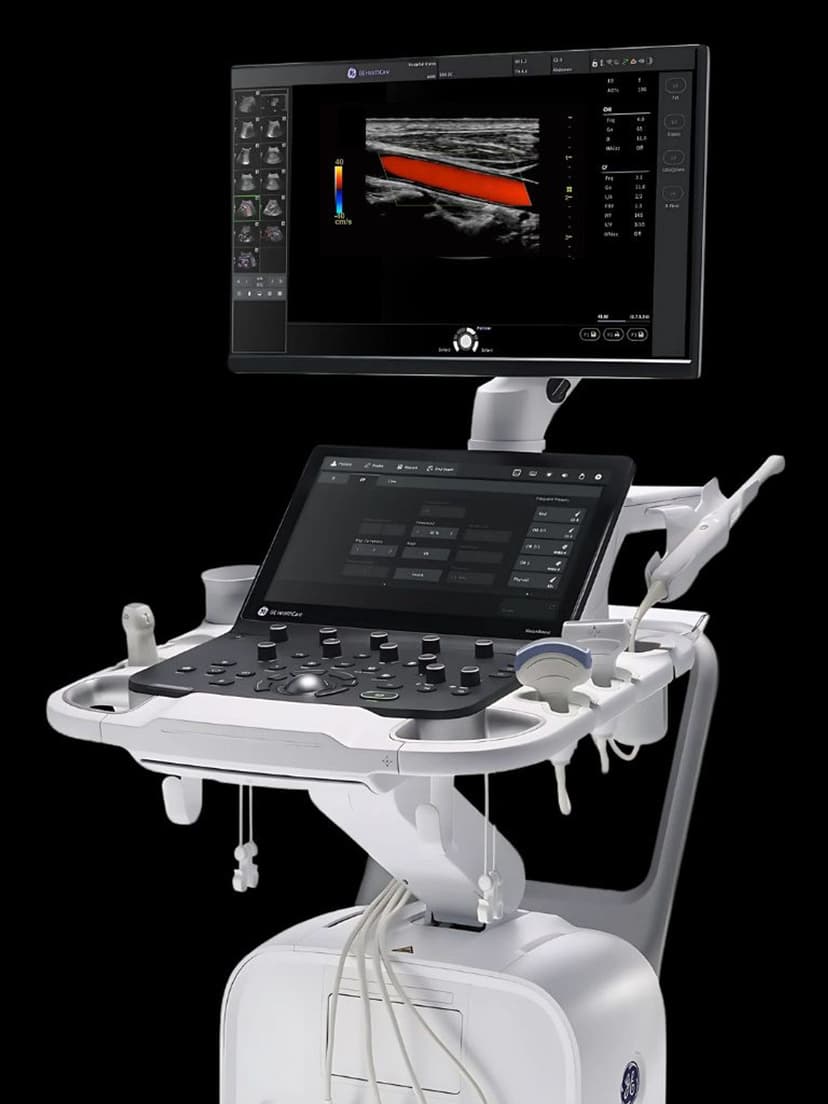
RS-Pin interface connects to GE LOGIQ and Versana mid-range ultrasound platforms.
Applications
Vascular Assessment
The 51 mm aperture captures full carotid bifurcation and femoral vessel segments in a single image. At 8–12 MHz, superficial arteries and veins resolve with the wall detail needed for intima-media thickness measurements. The lower 3.6 MHz range reaches deeper vessels like the subclavian and proximal femoral, and PW Doppler supports spectral analysis for stenosis quantification.
Small Parts & Superficial Imaging
Operating at the upper bandwidth, the L3-12-RS resolves thyroid nodules for TI-RADS scoring and breast lesions for BI-RADS assessment. The 51 mm field of view covers the full thyroid lobe without panoramic stitching. Color Doppler maps vascularity patterns within nodules and masses, adding diagnostic information beyond B-mode morphology alone.
Pediatric & Abdominal Imaging
The 3.6 MHz low end provides enough penetration for pediatric abdominal organs, including liver, kidneys, and spleen, where the smaller body habitus keeps target depths within the transducer's reach. The wide bandwidth auto-optimizes between deep and superficial structures within a single exam, reducing probe changes during general pediatric assessments.
Our Partners


















Need this probe for your system?
Request a quote with pricing, compatibility verification, and delivery timeline.