
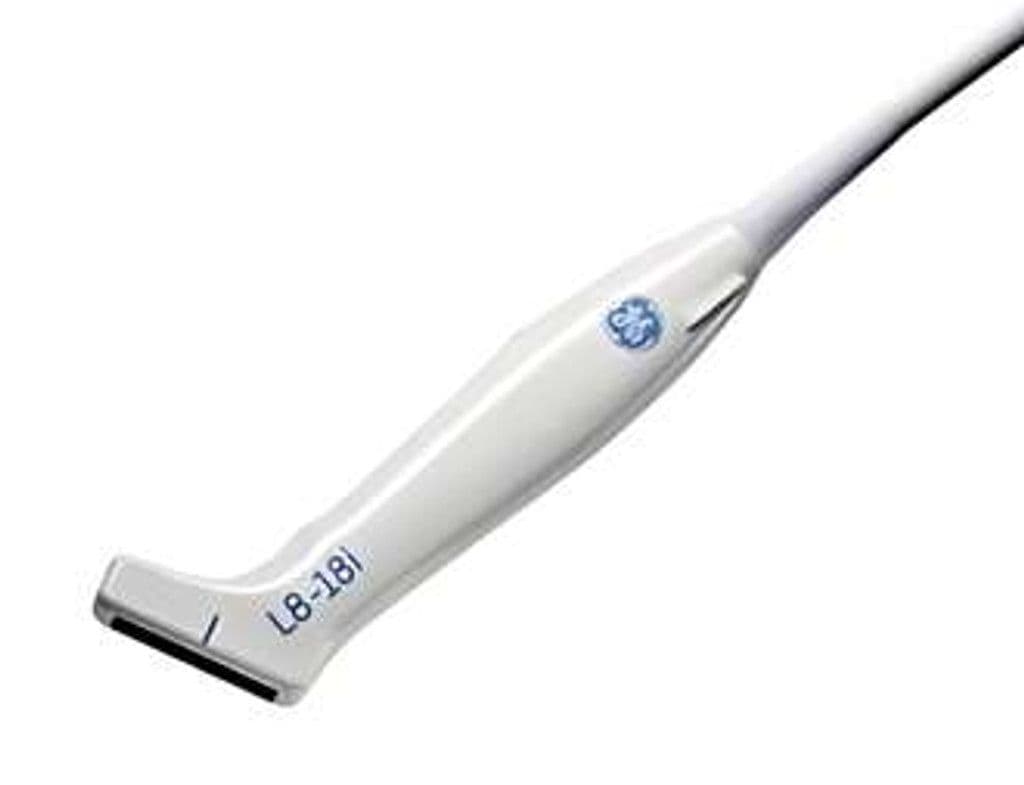
GE L8-18i-RS
The L8-18i-RS uses a compact hockey stick form factor to access anatomical areas that standard linear probes cannot reach, including the finger joints, superficial tendons, and pediatric vessels. The 6.7 – 18.0 MHz bandwidth provides axial resolution below 0.2 mm at the highest frequencies, resolving tendon fiber architecture, nerve fascicles, and thyroid microcalcifications. The 25.2 mm aperture is sized for small-field imaging where anatomical context is secondary to fine structural detail.
Specifications
Ultra-high frequency resolves tendon fibers, nerve fascicles, and microcalcifications in superficial structures.
Compact hockey stick field of view accesses finger joints, wrist tendons, and small pediatric vessels.
Optimized for superficial structures within the first few centimeters of tissue.
Doppler modes detect tendon hyperemia and confirm vessel patency for access guidance.
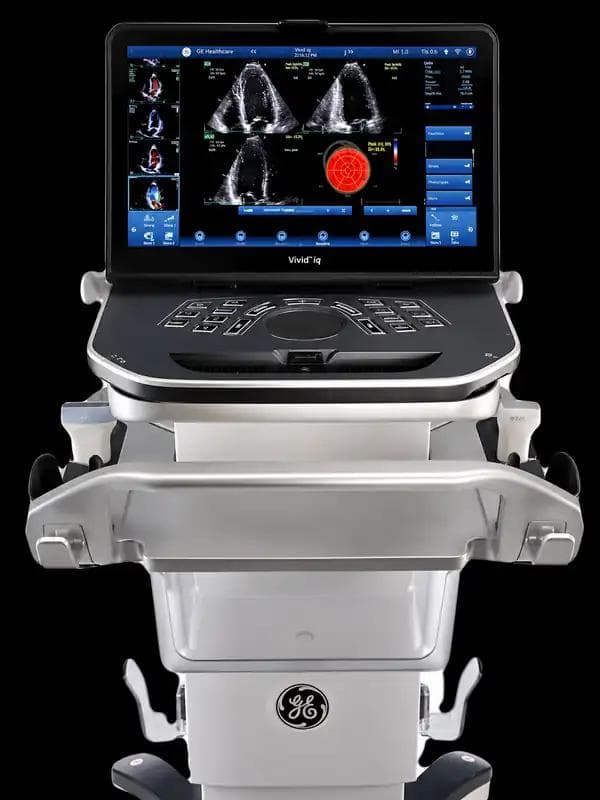
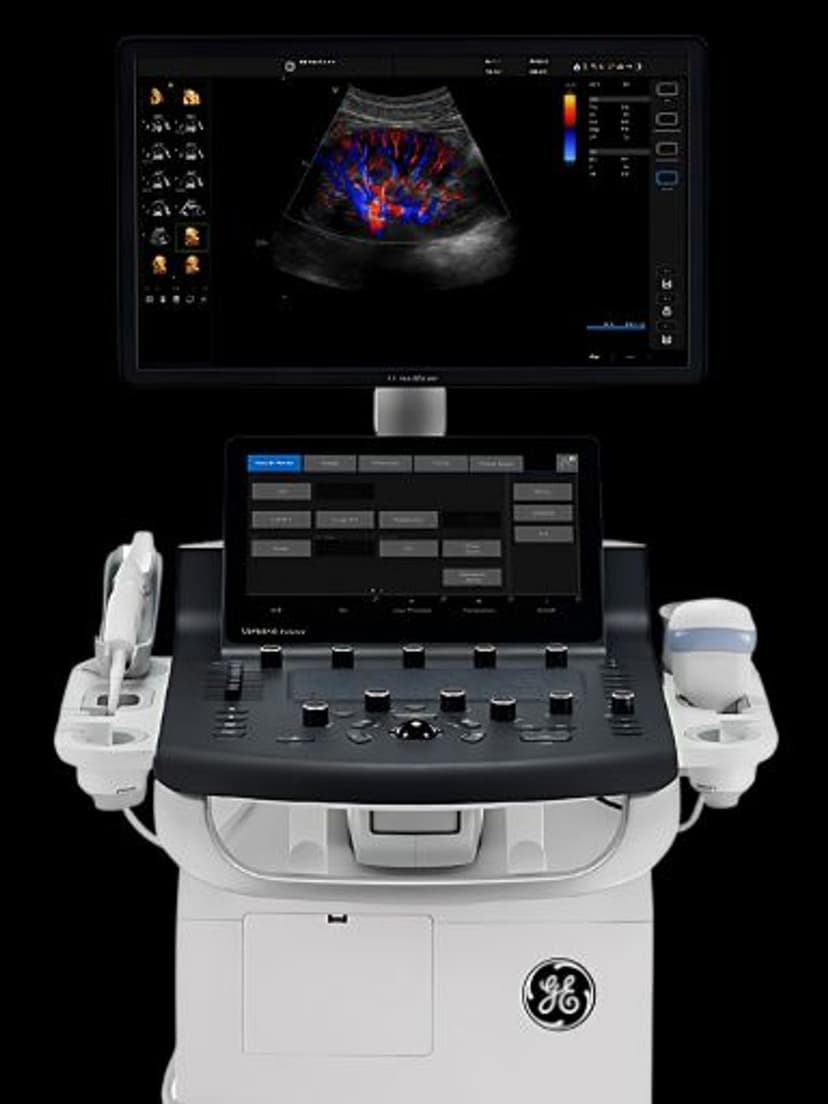
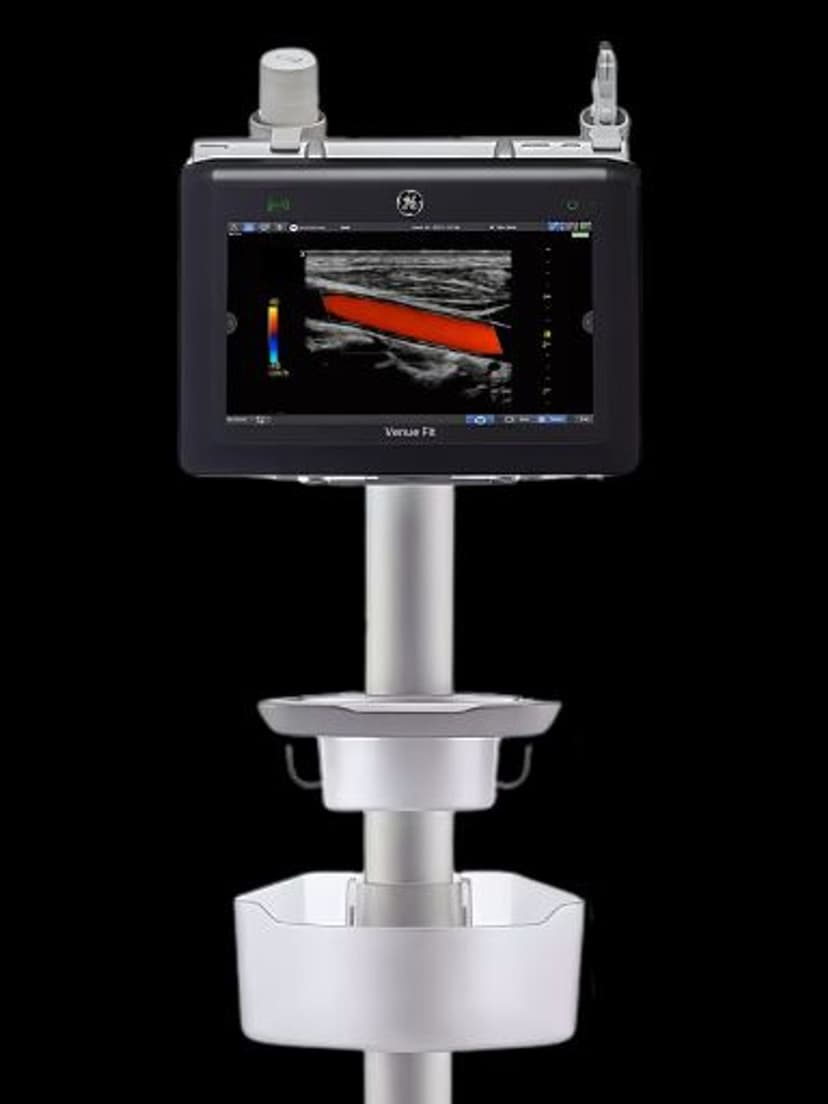
RS-Pin interface works across GE's broadest range of general imaging and portable platforms.
Applications
Musculoskeletal & Nerve Imaging
At 12–18 MHz, the hockey stick footprint resolves individual tendon fibers in the hand, wrist, and ankle where standard linear probes are too wide to make contact. Peripheral nerve imaging benefits from the high lateral resolution for identifying fascicular architecture and localizing entrapment sites at the carpal tunnel, cubital tunnel, and Guyon's canal. Dynamic scanning during finger flexion and extension evaluates pulley integrity and tendon gliding.
Superficial Small Parts
The 18 MHz upper frequency resolves thyroid nodules below 5 mm and identifies microcalcifications that factor into TI-RADS scoring. The compact footprint accesses the submandibular and parotid regions where standard probes create patient discomfort. For pediatric patients, the L8-18i-RS images superficial lymph nodes, skin lesions, and foreign bodies with minimal contact pressure.
Vascular Access & Guidance
The narrow footprint and high frequency make the L8-18i-RS effective for peripheral IV and arterial line placement guidance. The 25.2 mm aperture tracks needle advancement in real time during radial artery catheterization and pediatric venous access. Short-axis and long-axis approaches both benefit from the compact probe face fitting directly over small target vessels.
Our Partners


















Need this probe for your system?
Request a quote with pricing, compatibility verification, and delivery timeline.